
The urgent-care check-in counter, and what Antibiotic Awareness Week asks of cold season
November 16, 2026
This Wednesday, November 18, starts U.S. Antibiotic Awareness Week, which runs through Tuesday, November 24. CDC's theme this year is "Fighting Antimicrobial Resistance Takes All of Us." The timing is not an accident. It lands right as cold season is filling waiting rooms, and right before a lot of families travel for Thanksgiving on Thursday, November 26.
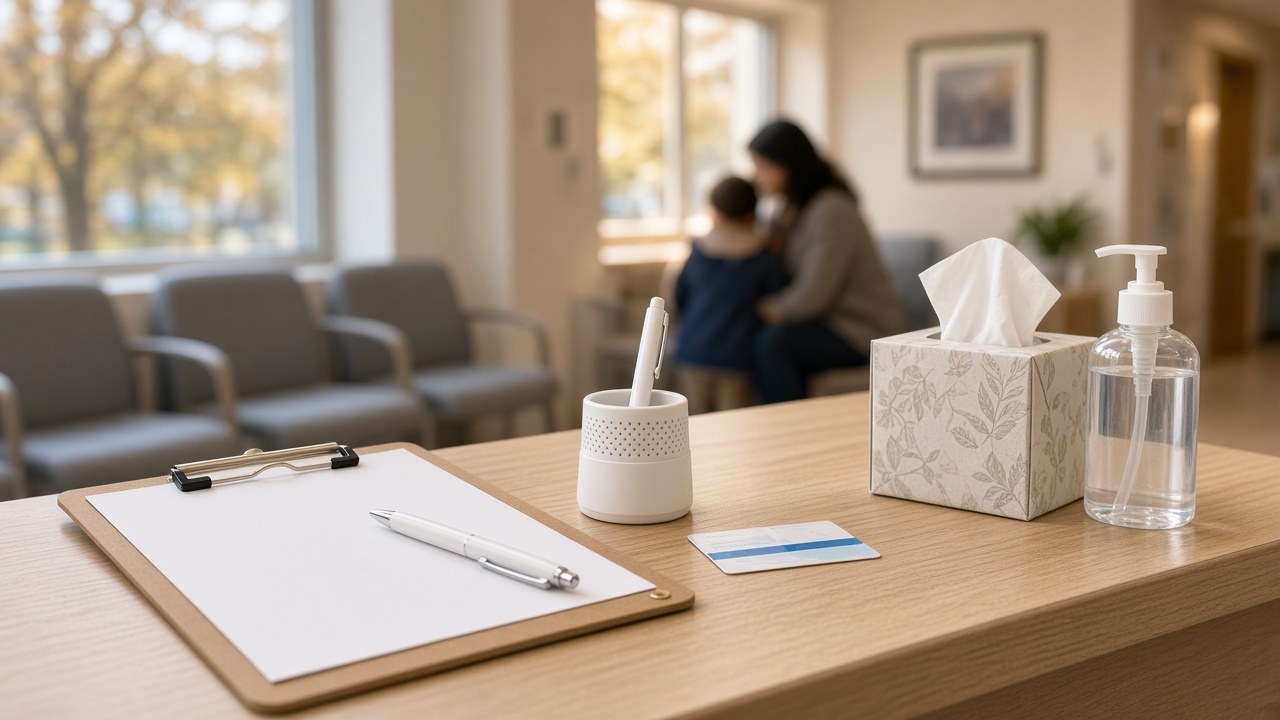
It is also a good week to look at a place most of us don't think about until we're standing at it: the check-in counter at an urgent-care clinic or pediatric office.
What CDC's new numbers say
Last month CDC released the 2026 update to its Antimicrobial Resistance Threats Report. Based on 2023 data, it estimates more than 9.3 million drug-resistant infections in the United States each year, and more than 39,000 deaths. When C. diff is included, the total reaches 9.7 million infections and 50,800 deaths. CDC cautions that these figures should not be compared directly with its 2019 report, because its data sources and methods changed.
CDC includes C. diff even though it usually isn't drug-resistant, because the same two things drive it: antibiotic use and the spread of germs. That pairing is the whole point of the week. Using antibiotics only when they are needed is half of it. Not getting infected in the first place is the other half.
The part antibiotics can't fix
Most of what walks into a clinic in November is viral: colds, flu, RSV, a lot of sore throats and coughs. Antibiotics don't work on viruses. A parent who brings in a feverish child the Friday before break often wants something that will fix it before the drive to Grandma's. For a virus, the honest answer is usually rest, fluids, and time.
That makes prevention the tool that actually helps. Fewer infections means fewer visits, fewer prescriptions written "just in case," and fewer chances for resistance to build.
What gets shared at the counter
Watch a busy check-in counter for ten minutes and the pattern is clear. Every patient touches the same few things:
- The pen. Intake forms, consent forms, a signature for the copay. The counter pen goes from hand to hand all day, often right after someone covered a cough.
- The insurance card and ID. They come out of a wallet, get handed across the counter, handled by staff, scanned, and handed back.
- The clipboard and the counter itself. Both get wiped when someone remembers.
None of this is the main way respiratory viruses spread. Much of that happens through the air, which is why ventilation, masking when you're sick, and staying home still matter. But hands carry germs to eyes, noses, and mouths, and shared objects are part of the chain. At a counter where nearly every person in line is sick, that chain is short.
Simple habits for the week before Thanksgiving
For clinics and front-desk staff:
- Stop sharing one pen across every patient. Use pens that are cleaned between users, or a cup of clean and used pens that staff actually rotate.
- Keep hand sanitizer at the counter, in reach of the line. Not behind the desk.
- Handle cards as little as possible. Ask patients to hold up or place their card for scanning, and sanitize it if staff must take it.
- Wipe the counter and clipboards on a schedule, not just when it looks dirty.
For families:
- Bring your own pen. It sounds small, but it takes one shared object out of your day.
- Clean your hands after check-in, before you touch your face or your phone.
- Ask whether antibiotics are actually needed. It's a fair question, and a good clinician will welcome it.
- If it's a cold and you're feeling okay, consider staying home instead of sitting in a full waiting room.
The same habits travel. School front offices, county clerk counters, and hotel front desks all see the same pre-holiday rush, and the same pen and card get handed across the same counter.
Where Cleanint fits
We built our products for exactly these counters. Cleanpen sanitizes the shared pen between every signature, so the clinic pen isn't the thing that moves a cold from one patient to the next. Cleancard lets staff sanitize insurance cards and IDs at the counter without extra handling. Cleanhands is a clip-on sanitizer front-desk staff can use with one hand between patients.
None of these replace staying home when you're sick, getting your flu shot, or asking whether you really need that antibiotic. They make the counter one less place germs get passed along, during the busiest few weeks of the year.
Sources: CDC, U.S. Antibiotic Awareness Week toolkit (November 18–24, 2026; theme "Fighting Antimicrobial Resistance Takes All of Us"); CDC, About Antimicrobial Resistance and the 2026 Antimicrobial Resistance Threats Report (released October 27, 2026, based on 2023 data).