
The hotel key card, and what Thanksgiving week brings to the front desk
November 9, 2026
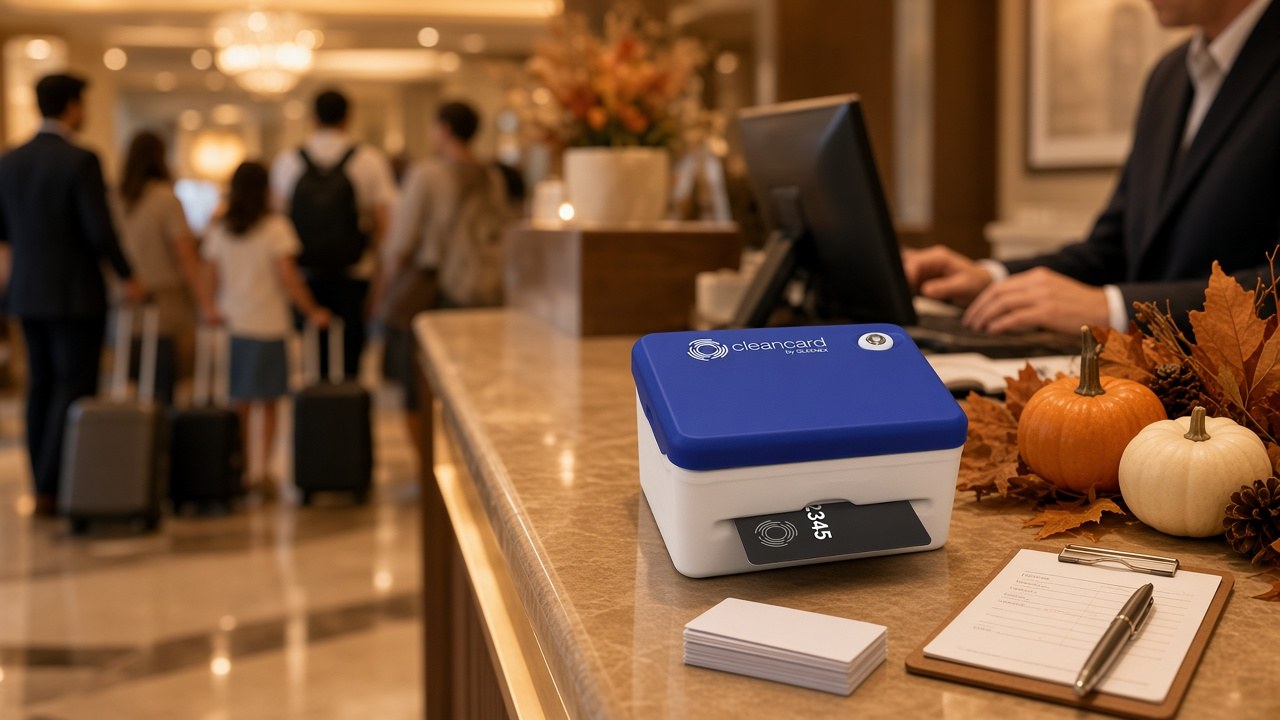
Thanksgiving is Thursday, November 26 this year. For a lot of hotels, the real holiday starts two days earlier. Last year AAA counted the Thanksgiving travel period as the seven days from the Tuesday before to the Monday after, and projected a record 81.8 million Americans traveling at least 50 miles from home, about 73 million of them by car. AAA hasn't published its 2026 forecast yet; last year's came out November 17. Either way, the pattern is familiar to anyone who has worked a front desk: Tuesday and Wednesday evenings stack up with families who drove all day, and Sunday and Monday mornings bring the checkout rush.
In all that traffic, one small object passes through more hands than almost anything else in the lobby. It's the key card.
One card, a lot of hands
Follow a single key card through a holiday stay. The agent pulls it from the drawer, encodes it, and slides it across the counter. The guest hands it to a spouse, who hands one to a teenager. It rides in pockets, sits on a restaurant table, goes in and out of the elevator reader a dozen times. At checkout it lands back on the counter, or in the drop box, and goes back into the drawer for the next guest.
Most key cards are reused. That's sensible; it saves plastic and money. But it means the card on the counter Wednesday night was probably in someone else's pocket Monday.
The same counter handles credit cards and driver's licenses at check-in, and a shared pen for the registration card or the incidentals form. During a normal week, that's a manageable amount of hand-to-hand contact. During Thanksgiving week, with multigenerational families, kids, and a lot of tired travelers, it adds up.
What the evidence actually says
It's worth being careful here. CDC's guidance is that flu spreads mainly through droplets when sick people cough, sneeze, or talk. Touching a contaminated surface and then your mouth, nose, or eyes is a real route, but CDC describes it as the less common one. A key card is not the main way anyone catches the flu.
What makes the holiday week different is timing. CDC says people with flu are most contagious in the first three days of illness, and that the virus can be detected starting about a day before symptoms show. A guest who checks in Tuesday feeling fine can be contagious by the time they check out Sunday. The front desk sees every one of those guests, at both ends of the stay, and front-desk staff are working long shifts through the same week.
We couldn't find a solid, recent study measuring germs on hotel key cards specifically, so we won't quote a number. The case doesn't need one. The card is high-touch, shared, reused, and handled hardest at exactly the time of year respiratory illness is climbing.
Small habits that help at the desk
None of this calls for a new cleaning program. A few habits go a long way during a busy week:
- Clean the reused keys before they go back in the drawer. Returned cards are the easiest object to treat, because they all come back to one place.
- Stop passing cards hand to hand. Let the guest set their ID or payment card down, and slide the room key back the same way. It's quicker than it sounds, and it's one less handoff.
- Retire the cup of shared pens. A pen that sanitizes itself, or a pen per guest, beats a cup of pens that never gets cleaned.
- Give staff a way to clean their own hands between guests. Sinks are rarely behind the desk. Alcohol-based sanitizer at hand reach is what actually gets used.
- Tell sick staff to stay home if you can cover the shift. This is the hardest one during a holiday week and the one that matters most.
Where Cleanint fits
We built Cleancard for counters like this one. It sits on the desk; a card goes in one side and comes out the other, sanitized as it passes through. It works on room keys, credit and debit cards, and driver's licenses, so the agent and the guest don't have to hand cards to each other at all. Cleanpen does the same job for the registration pen, sanitizing the tip between signatures, and Cleanhands clips on so staff can sanitize one-handed between guests.
They won't stop a guest from coughing in the lobby, and they're not a substitute for housekeeping. They take a few of the most-handled objects at the front desk and make them a little less shared, during the week when that matters most.
Safe travels, and happy Thanksgiving from all of us at Cleanint.
Sources: AAA Thanksgiving travel forecast, Nov. 17, 2025; CDC, How Flu Spreads.