
The lunch-line keypad, and what norovirus season brings to the cafeteria
November 2, 2026
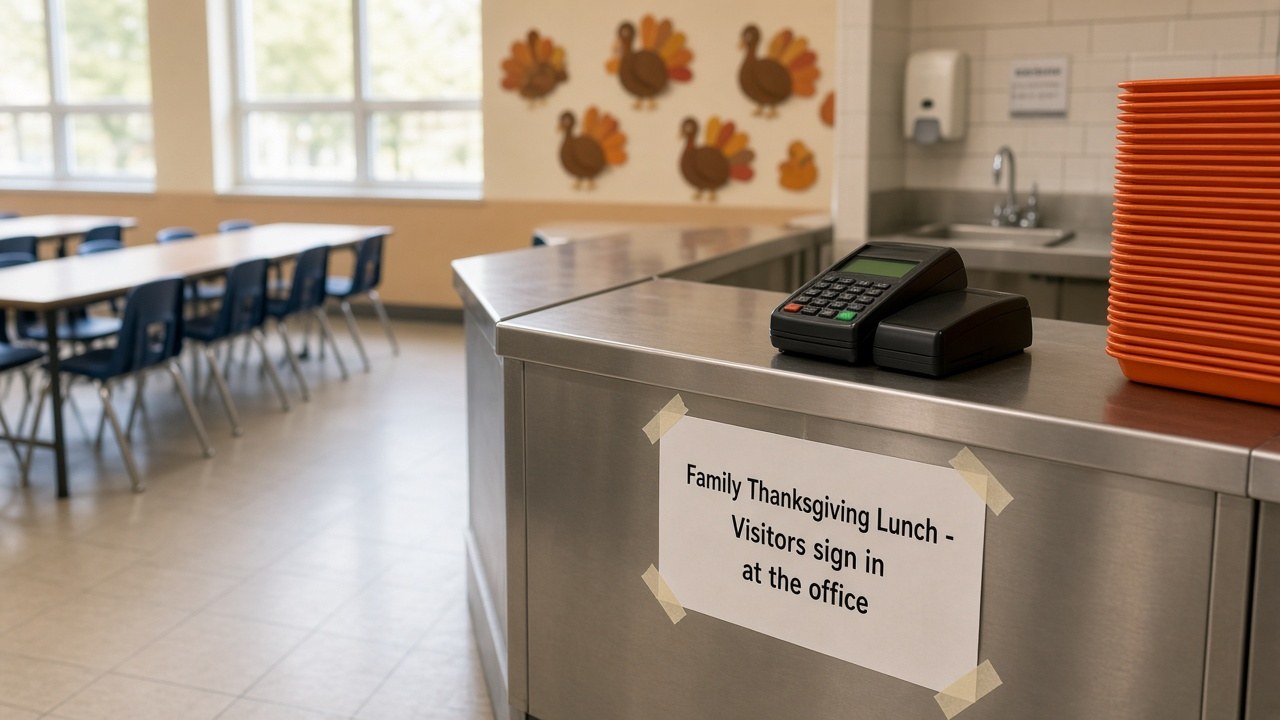
Election Day is tomorrow, and after that the school calendar turns to Thanksgiving. A lot of elementary schools host a family Thanksgiving lunch in the weeks before the break. Parents and grandparents sign in at the office, walk to the cafeteria, go through the line with their kids, and pay at the register.
This fall we have written about the office pen, the Chromebook cart, the training-room cooler, the polling-place check-in table, the nurse's sign-in log, and the party-volunteer sheet. This week's object is the one almost every student touches before they eat: the PIN keypad at the end of the lunch line.
What happens at the register
In many cafeterias, each student types a lunch number into a small keypad at the register. A few hundred kids can do that in a single lunch period, one after another, with hands that just came off a tray, a backpack strap, or the playground. Then they sit down and eat with those hands, often finger foods.
The keypad is not the problem by itself. It is a good example of the kind of object that everyone touches in a row right before a meal. On a family lunch day, the line gets longer and adds adults who just came in from the parking lot.
Why November matters
CDC says norovirus outbreaks happen all year but are most common from November to April. Norovirus is the leading cause of vomiting and diarrhea in the United States, and it is the leading cause of outbreaks from contaminated food. CDC lists schools, childcare centers, and colleges among the settings where outbreaks happen often, and says close quarters, shared spaces, and high-touch surfaces make it easy to spread there.
Norovirus spreads through close contact with someone who is sick, through contaminated food or drinks, and by touching contaminated surfaces and then putting unwashed fingers in your mouth. CDC also notes it can persist on surfaces for days or weeks and resists many common disinfectants. People usually feel sick 12 to 48 hours after they are exposed, and they can keep spreading the virus for two weeks or more after they feel better.
What actually works, in order
The first step is the one people skip: stay home. CDC says people with norovirus should stay home for two days (48 hours) after symptoms stop, and should not prepare or handle food during that time. That goes for cafeteria staff and for the uncle who had a rough night but really wanted to make the Thanksgiving lunch.
The second step is soap and water. This is where we need to be honest about our own category. CDC says plainly that hand sanitizer does not work well against norovirus. Sanitizer can be used in addition to handwashing, but it is not a substitute. CDC recommends washing with soap and water for at least 20 seconds, especially after using the toilet and before eating or handling food. The best fix for the lunch line is a handwashing stop on the way to the cafeteria, not a pump at the register.
The third step is cleanup. When a student gets sick in the cafeteria, CDC recommends wiping up the whole area with gloves and paper towels, then disinfecting with a bleach solution of 1,000 to 5,000 ppm (5 to 25 tablespoons of household bleach per gallon of water) or an EPA-registered product that works against norovirus, left on for at least 5 minutes. Not every general-purpose wipe is labeled for norovirus, so check the label. If your custodial team keeps a cleanup kit for this, November is a good month to make sure it is stocked.
Norovirus is not the only thing going around. Flu is also rising earlier than usual this fall, and flu is a different virus that sanitizer does work on. Flu and other respiratory viruses spread mostly through the air, so shared objects are a secondary route for them. That is the same honest limit we use everywhere on this site.
Where Cleanint fits, and where it doesn't
Nothing we sell replaces handwashing for norovirus. Here is where our products do help on a family lunch day.
Cleanpen is for the visitor sign-in at the front office, which is the first thing every family member touches. The holder sanitizes the pen each time it is used, so the fiftieth grandparent of the morning gets the same pen the first one did. The holder with one refill is $22.99. Replacement cartridges are $6.95, and an 8 oz refill bottle is $14.99.
Cleanhands is for staff and volunteers between tasks, like checking in visitors, handling cash, and helping at the line, against the everyday cold and flu germs alcohol sanitizer does handle. It clips to a lanyard or belt, dispenses with one hand, and holds up to 1,000 sprays of 75% isopropyl alcohol per cartridge. The double pack is $24.95. It is for adult hands, and on lunch days it goes in addition to a sink, not instead of one.
If your campus has a family lunch this month, the list is short: a sink stop before the line, a Cleanpen at the visitor sign-in, a stocked norovirus cleanup kit, and a friendly note home asking anyone who has been sick to wait 48 hours and come to the next one.
Enjoy the turkey. Wash first.
Where to read more
CDC. Norovirus Outbreaks. Updated Apr. 22, 2026. https://www.cdc.gov/norovirus/outbreak-basics/index.html
CDC. How to Prevent Norovirus. Updated Jan. 13, 2025. https://www.cdc.gov/norovirus/prevention/index.html
CDC. About Norovirus. Updated Apr. 24, 2024. https://www.cdc.gov/norovirus/about/index.html
CDC. Weekly US Influenza Surveillance Report: Key Updates for Week 41, ending October 17, 2026. https://www.cdc.gov/fluview/surveillance/2026-week-41.html